
Crash Data
Crane Collapse in NYC: The Tribeca Disaster
NYC crane collapses have killed 10 people since 2008 and produced hundreds of millions in verdicts and settlements. Crane safety, DOB rules, and liability.

Key Finding
NYC crane collapses have killed 10 people since 2008 and generated hundreds of millions of dollars in settlements and verdicts. The 2016 Worth Street collapse produced the largest crane accident settlement in New York history: $272.5 million. Regulatory overhauls after each disaster have reduced fatalities, but the pattern persists: enforcement gaps, ignored safety bulletins, and cost-cutting on equipment.
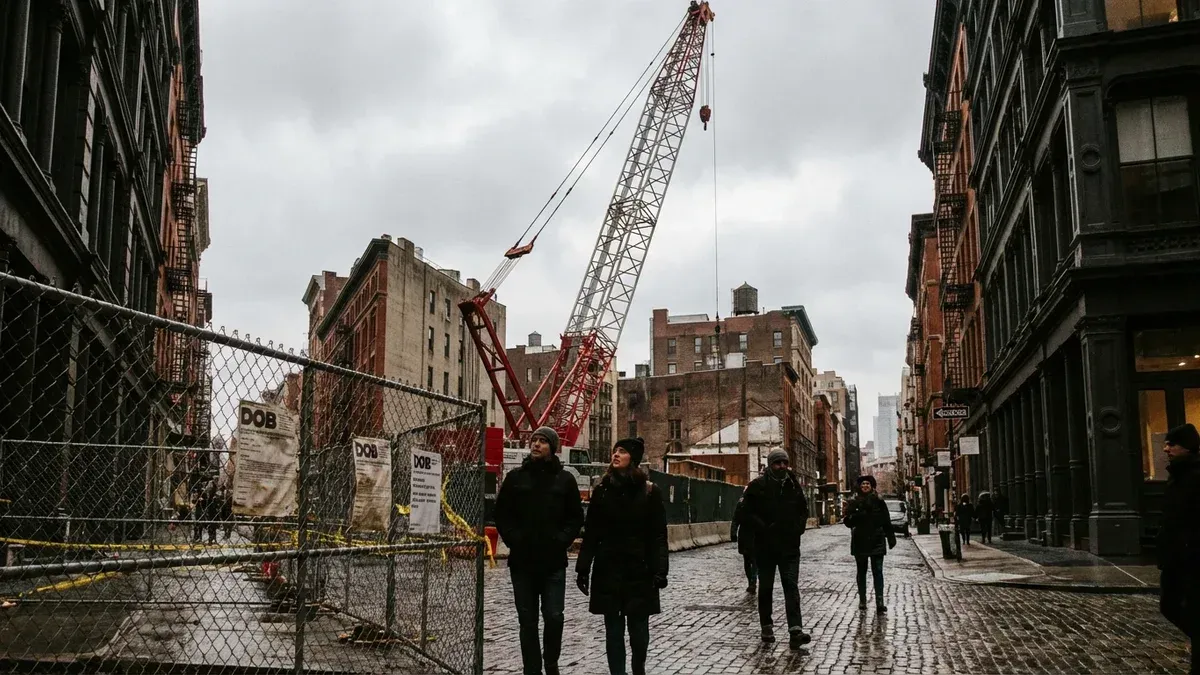
On February 5, 2016, a 565-foot crawler crane toppled on Worth Street in Tribeca. It crushed a parked car and killed 38-year-old pedestrian David Wichs. Three others were injured. The operator had failed to secure the crane the night before while lowering it in 37 mph winds.
That single collapse reportedly produced a $272.5 million settlement, the largest crane accident payout in New York City history, according to the plaintiffs’ firm on the case. The operator’s license was permanently revoked.
$272.5M
settlement from the 2016 Worth Street crane collapse in Tribeca: the largest crane accident settlement in New York history. Ten people have died in NYC crane collapses since 2008.
It wasn’t an isolated event. Two crane collapses in 2008 killed a combined nine people. A 2023 fire on a crane 45 stories above Hell’s Kitchen injured 12. Each disaster triggered regulatory reforms. Each time, the pattern held: warnings ignored, enforcement gaps exploited, workers and pedestrians paying the price.
We traced every major New York City crane collapse, what the city changed after each one, and where the liability landed.
The Three Deadliest Crane Collapses in NYC History
March 15, 2008: East 51st Street
A tower crane collapsed on Manhattan ’s East Side. Seven people killed, 24 injured. The OSHA investigation found the polyester slings supporting the crane’s suspended collar failed during a jumping operation, when the collar was supposed to tie the mast laterally to the building.
Manhattan prosecutors charged master rigger William Rapetti with manslaughter, alleging he secured the crane with too few worn slings. A judge acquitted Rapetti in 2010. Roughly 60 civil lawsuits followed and resolved through confidential settlements, with no single public verdict figure. The crane on this site was not owned by New York Crane and Equipment.
May 30, 2008: East 91st Street
Eleven weeks later, a crane owned by New York Crane and Equipment Corporation collapsed on the Upper East Side. Two workers killed: operator Donald Leo and ground worker Ramadan Kurtaj. The cause: a faulty turntable bearing manufactured in China. A supplier had warned owner James Lomma about quality concerns before the bearing went into service.
A jury awarded the two families $96 million, including $48 million in punitive damages. The First Department reduced the total to roughly $35 million on appeal. Lomma was acquitted of manslaughter in 2012. The NYC Department of Buildings Commissioner resigned in the wake of the 2008 collapses.
$35M
Jury Verdict (reduced on appeal from $96M)
East 91st Street crane collapse, May 2008. Two workers killed. Faulty turntable bearing manufactured in China. Original $96M jury award, including $48M punitive, reduced by the First Department on appeal. New York Crane and Equipment Corp.
Theory: Labor Law § 240(1)
Reported New York case, not a case this firm handled.
February 5, 2016: Worth Street, Tribeca
A 565-foot crawler crane being lowered ahead of high winds tipped over. It stretched an entire city block. One pedestrian killed, three injured. The operator was lowering the boom but failed to properly secure it overnight.
At the time, 429 cranes were operating across the five boroughs: 376 crawler cranes and 53 tower cranes.
The resulting litigation reportedly produced the largest crane accident settlement in New York history, according to the plaintiffs’ firm on the case.
$272.5M
Reported Settlement
Worth Street crawler crane collapse in Tribeca, February 2016. One pedestrian killed, three injured. Reported as the largest crane accident settlement in New York history. Third-party public record, not a result of this firm.
Theory: Common-law negligence
Reported New York case, not a case this firm handled.
The 2023 Hell’s Kitchen Incident
On July 26, 2023, a hydraulic hose failure caused a fire on a Favelle Favco crane 45 stories above Hell’s Kitchen. Twelve workers were injured. The crane was owned by New York Crane and Equipment, the same company behind the May 2008 East 91st Street collapse.
The DOB investigation found the company had ignored a 2016 manufacturer safety bulletin. It specifically addressed the hydraulic system at the point of failure.
The incident led to the most sweeping crane regulation in the city’s history. In December 2025, the city mandated fire suppression systems on all diesel tower cranes operating in New York.
National Crane Fatality Data
The Bureau of Labor Statistics recorded 297 crane-related fatalities nationwide between 2011 and 2017. An average of 42 deaths per year. New York City accounts for about 6% of national crane fatalities despite operating a disproportionately small share of the country’s crane fleet.
The same BLS data shows just over half of all fatal crane injuries are struck-by incidents: workers or bystanders hit by the crane structure, loads, or falling objects.
How NYC Changed Its Crane Laws
Every major collapse has triggered legislative action. The regulatory timeline:
After the 2008 collapses:
- 12 new crane safety laws enacted
- NCCCO (National Commission for the Certification of Crane Operators) certification required for all crane operators in the city
- $4 million crane oversight study commissioned
- DOB Commissioner Robert LiMandri resigned
- Master rigger and signal person licensing requirements tightened
After the 2016 Worth Street collapse:
- Wind threshold for crane operations lowered to 20 mph
- Fines for crane safety violations doubled to $10,000
- Local Law 3 of 2018: 25-year age limit imposed on cranes operating in NYC (Building Code § 3319.13)
- Crane operators required to submit weather monitoring plans before operations
After the 2023 Hell’s Kitchen fire:
- Fire suppression systems mandated on all diesel tower cranes (December 2025)
- Hoisting Machine Operator (HMO) license expanded to cover mini cranes and articulating booms, making NYC the first city in the nation to regulate these smaller machines
DOB enforcement in 2024:
- 416,290 field inspections conducted (a record)
- Construction injuries dropped 30% compared to the prior year
- Worker fatalities at a 10-year low
Where Crane Activity Stands Now
Crane activity in NYC has contracted. The RLB Crane Index for Q3 2025 put New York City among the cities where tower crane counts fell more than 20% that quarter. That reflects both the regulatory tightening and the broader slowdown in new construction starts.
For context, 429 cranes were operating across the city at the time of the 2016 Worth Street collapse. The current count is a fraction of that peak.
Liability in NYC Crane Collapse Cases
Crane collapse cases are complex. Multiple parties, multiple insurance policies, federal and state regulations. But New York’s legal framework heavily favors injured workers and bystanders.
Labor Law § 240(1) : The Scaffold Law. This statute imposes absolute liability on property owners and general contractors for gravity-related injuries on construction sites. A crane collapse is a textbook 240(1) case.
It doesn’t matter if the owner hired a subcontractor. It doesn’t matter if the injured worker made a mistake. The property owner and general contractor are liable.
The Scaffold Law protects construction workers, not pedestrians or bystanders. A pedestrian hurt by a collapsing crane, like David Wichs on Worth Street, recovers under common-law negligence against the owner, contractor, and crane operator, not under 240(1).
Multiple responsible parties. A single crane collapse can produce claims against:
- The crane owner/operator company
- The general contractor
- The property owner
- The crane manufacturer (products liability)
- The rigger or signal person
- Engineering firms that approved crane plans
Verdicts and settlements. NYC crane collapse cases consistently produce eight- and nine-figure outcomes:
- $272.5 million settlement, reported (2016 Worth Street)
- $96 million jury award, reduced to roughly $35 million on appeal (2008 East 91st Street)
- Roughly 60 lawsuits resolved through confidential settlements (2008 East 51st Street)
These figures reflect the severity of crane collapse injuries: crush injuries, traumatic brain injuries, spinal cord damage, amputations, and death. Prior results do not guarantee a similar outcome.
The Pattern
Every major NYC crane collapse follows the same pattern: known risks that went unaddressed, safety bulletins ignored, cost-cutting that overrode caution.
One company connects the dots. New York Crane and Equipment owned the crane in the 2008 East 91st Street collapse (faulty turntable bearing) and the crane in the 2023 Hell’s Kitchen fire (ignored safety bulletin).
Between those incidents, the city passed dozens of new laws, doubled fines, and created new licensing requirements. Fatalities have declined. But the underlying dynamic persists.
Construction in New York City requires cranes. Cranes require operators, riggers, engineers, and inspectors to do their jobs correctly every time. When they don’t, the consequences land on workers and pedestrians.
Sources
- OSHA. (2008). Investigation of the March 15, 2008 Fatal Tower Crane Collapse at 303 East 51st Street. https://www.osha.gov/construction/engineering/2008-09
- NY Appellate Division, First Department. (2017). Matter of 91st St. Crane Collapse Litigation (Leo v. Lomma), 154 A.D.3d 139. https://law.justia.com/cases/new-york/appellate-division-first-department/2017/117469-08-117294-08-771000-10.html
- NYC Department of Buildings. (2018). DOB Permanently Revokes License of Operator in 2016 Worth Street Crane Collapse. https://www.nyc.gov/site/buildings/dob/pr-revokes-license.page
- Bureau of Labor Statistics. (2019). Fatal Occupational Injuries Involving Cranes, 2011-2017. https://www.bls.gov/iif/factsheets/fatal-occupational-injuries-cranes-2011-17.htm
- NYC Mayor's Office and Department of Buildings. (2025). Annual Construction Safety Report, 2024. https://www.nyc.gov/mayors-office/news/2025/04/mayor-adams-dob-commissioner-oddo-release-annual-construction-safety-report-highlight-safest
- Rider Levett Bucknall. (2025). RLB Crane Index North America, Q3 2025. https://www.rlb.com/americas/insight/rlb-crane-index-north-america-q3-2025/
- Gair, Gair, Conason. (2016). Worth Street Crane Collapse: Reported $272.5 Million Settlement. https://www.gairgair.com/crane-accidents.html
- NYC Department of Buildings. (2018). Local Law 3 of 2018, Crane Modernization (Building Code 3319.13). https://www.nyc.gov/assets/buildings/local_laws/ll3of2018.pdf
Updated July 9, 2026
Frequently asked questions
- Who is liable when a crane collapses in NYC?
Liability depends on the cause. Potentially responsible parties include: the crane owner, the general contractor, the crane operator, the property owner, the crane manufacturer (if a mechanical defect caused the collapse), and any subcontractors involved in rigging or assembly. Under New York Labor Law 240(1), property owners and general contractors have absolute liability for gravity-related injuries on construction sites, including crane collapses. This is strict liability: the injured worker does not need to prove negligence.
- What was the largest crane accident settlement in NYC?
The largest reported crane accident settlement in NYC was $272.5 million, resulting from the February 2016 Worth Street crane collapse in Tribeca. A crawler crane toppled in 37 mph winds while being lowered, killing one pedestrian and injuring three others. The settlement covered claims from the estate of the deceased, the injured parties, and property damage. This figure comes from the plaintiffs' firm; no independent verdict tracker or court record publishes a confirmed total.
- What regulations changed after the NYC crane collapses?
After the two 2008 collapses, the city passed 12 new crane safety laws, required NCCCO certification for all crane operators, and commissioned a $4 million crane oversight study. After the 2016 Worth Street collapse, the DOB lowered the wind threshold for crane operations to 20 mph and doubled fines to $10,000. Local Law 3 of 2018 imposed a 25-year age limit on cranes operating in NYC. In December 2025, the city mandated fire suppression systems on all diesel tower cranes following the 2023 Hell's Kitchen incident.
- What was the verdict on the Greystar crane collapse?
No single public verdict or settlement figure tied specifically to a "Greystar crane collapse" appears in available court records, NYC Comptroller settlement data, or published NYC Open Data sources, so we can't confirm the outcome you may be referencing. Crane collapse litigation in New York City typically involves multiple defendants, including crane owners, operators, general contractors, and property owners, with liability analyzed under Labor Law § 240, Labor Law § 241(6), and common-law negligence, and cases often resolve through confidential settlements rather than public jury verdicts. If you're researching a specific collapse tied to a Greystar construction project, the NYC Department of Buildings incident database and court filings through the New York State Unified Court System's e-courts portal are the most reliable places to locate case-specific records. An attorney familiar with construction accident litigation can help you identify the correct case caption, trace any related DOB enforcement actions, and evaluate whether a claim remains viable under CPLR § 214, which generally sets a three-year statute of limitations for personal injury actions in New York.
- What was the cause of the Big Blue crane accident?
"Big Blue" refers to a Lampson Transi-Lift crawler crane that collapsed on July 14, 1999, during construction of Miller Park baseball stadium in Milwaukee, Wisconsin, not a New York City site. Three ironworkers died when the crane toppled while lifting a 450-ton roof section. Investigators found the crane was operated in winds that exceeded its rated limit, and the lift went forward despite the conditions. People often search the name while looking into NYC crane collapses, so it's worth being clear: the Big Blue disaster happened in Milwaukee. New York City's own major collapses include the 2008 East 51st Street and East 91st Street tower cranes and the 2016 Worth Street crawler crane. Liability in NYC crane collapse cases typically involves multiple parties, including the crane owner, the general contractor, the site owner, and potentially the manufacturer, with claims often pursued under Labor Law § 240 and § 241(6), which impose non-delegable duties on owners and contractors for elevation-related construction hazards. If you or someone you know was injured in a crane or construction accident in New York, speaking with a trial lawyer about the specific facts is the right first step, since CPLR § 214(5) generally sets a three-year deadline to file a personal injury claim.
- Who was charged in the Big Blue crane accident?
The Big Blue collapse happened in Milwaukee in 1999, and no New York prosecutor handled it. New York City's own 2008 collapses each drew a separate criminal case, and both ended in acquittal. After the March 15, 2008 East 51st Street collapse that killed seven people, Manhattan prosecutors charged master rigger William Rapetti with manslaughter, alleging he secured the crane with too few and worn nylon slings. A judge acquitted Rapetti in 2010. After the May 30, 2008 East 91st Street collapse that killed two workers, the district attorney charged crane owner James Lomma and his company, New York Crane and Equipment Corporation, alleging a defective weld on a turntable bearing sourced from a Chinese manufacturer caused the failure. Lomma was acquitted in 2012. Civil litigation that followed each collapse produced substantial recoveries for injured persons and the families of those killed. If you lost a family member or were hurt in a construction crane accident, an attorney can evaluate your claims under Labor Law § 240, Labor Law § 241, and common-law negligence theories that may apply regardless of how criminal proceedings resolved.
Injured in NYC? Talk to a Trial Lawyer.
Free consultation. No fee unless we win.
For journalists, researchers, and re-publishers
Use this insight
Cite this insight
Three formats. Click to copy. Use whichever your style guide accepts.
APA AP style BibTeX
Antin, J. S. (2026, March 25). Crane Collapse in NYC: The Tribeca Disaster. AEE Law Insights. https://aeelaw.com/insights/crane-collapse-nyc/
Contact the data desk
AEE Law editorial desk. Press inquiries answered within one business day.
Contact the data desk
If you were injured in New York and need a lawyer, get Jeff's read on your case.
More from AEE Law Insights
Five Years Later, New York's Traffic Deaths Are Still 18% Above 2019
New York recorded 1,101 traffic deaths in 2024, 17.9% more than the 934 recorded in 2019, the state's pre-pandemic low. Deaths peaked at 1,182 in 2022 and have eased since, but they remain well above where they stood before the pandemic. The decade of steady declines that ran through 2019 has not resumed.
New York's Deadliest Roads Aren't in the City. They're Upstate.
From 2019 to 2023, Genesee County recorded 51 traffic deaths against a population near 58,000, a rate of 88 per 100,000 residents over those five years. Manhattan's five-year rate was 11.5. Genesee's was 7.6 times higher. Thirty counties, nearly all of them rural and upstate, were deadlier per person than any New York City borough, even though the city recorded far more crashes overall.
The NYC E-Bike Injury Ledger: Every Crash, Every Person Hurt
New York's e-bike-involved crashes have injured 17,434 people and killed 133 since 2019, pedestrians and delivery riders alike. This ledger comes from a full review of 2.27 million NYPD collision records, counting e-bike crashes through May 2026. In 2025, eight of the city's 23 cyclist deaths happened in e-bike-involved crashes.