
Legal Trends
Construction Accident Settlements in NY
Construction settlements in New York range from $50,000 to $272 million. Real verdict data, Labor Law 240 impact, and what determines case value.

In this report
Key Finding
Construction accident cases in New York range from $50,000 to over $272 million. Labor Law 240 gives injured workers absolute liability protection no other state provides.
There’s no single “average” construction accident settlement in New York. Anyone who tells you otherwise is oversimplifying.
Construction accident cases range from $50,000 for a minor fracture to $272.5 million for the 2016 Tribeca crane collapse. The number depends on how badly you were hurt, who was responsible, which laws apply, and how much insurance is available.
$272.5M
the largest crane-collapse settlement in New York history, from the 2016 Tribeca crane collapse on Worth Street that killed a pedestrian and injured three others.
What we can do: show you what real cases have paid out, explain the legal framework driving these numbers, and identify the factors that push settlements higher or lower. This article draws on published court verdicts, government safety data, and workers’ compensation records.
Why New York Is Different
New York construction workers have stronger legal protections than workers in any other state. The reason is Labor Law § 240(1) , commonly known as the Scaffold Law.
Labor Law § 240(1) imposes absolute liability on property owners and general contractors for gravity-related construction injuries. That covers falls from scaffolds, ladders, and roofs. It covers injuries from falling objects like tools, building materials, and debris.
“Absolute liability” means the injured worker doesn’t need to prove negligence. If safety devices were absent, inadequate, or defective, and that failure contributed to a gravity-related injury, the property owner and general contractor are liable. Period.
More importantly, comparative negligence isn’t a defense under Labor Law § 240(1). A worker who was partially at fault can still recover full damages. Courts have upheld awards even when workers failed to use safety harnesses, provided adequate safety equipment wasn’t made available.
The financial impact is substantial. According to Chubb insurance data on NY Labor Law 240, the frequency of bodily injury claims in New York is more than 12 times higher than in all other states combined.
On average, one bodily injury general liability claim is filed for every $2.74 million in construction payroll in New York.
Real Settlement and Verdict Data
The following cases are from published court records and law firm case result pages. They represent a range of injury types and outcomes.
Catastrophic and Fatal Cases
$272.5M
Settlement: Tribeca Crane Collapse
Crawler crane toppled on Worth Street (Feb 2016), killing a pedestrian and injuring three others. Largest crane-collapse settlement in New York history.
Reported New York case, not a case this firm handled.
$110.2M
Verdict: Falling Object
Cyclist paralyzed by a falling railroad tie during maintenance work on an overhead subway line.
Reported New York case, not a case this firm handled.
$53.5M
Verdict: Construction Fall
Worker suffered paralysis from the waist down after a fall at a Brooklyn construction site.
Reported New York case, not a case this firm handled.
$25M
Verdict: Demolition Collapse
55-year-old Westchester man suffered a traumatic brain injury when a structure collapsed during a demolition project.
Reported New York case, not a case this firm handled.
Fall Accidents (Most Common Category)
$15M
Settlement: Fall From Height
Worker fell while painting walls at 8 feet. The contractor failed to provide OSHA-required fall protection.
Reported New York case, not a case this firm handled.
$9.75M
Settlement: Scaffold Collapse
Worker's scaffold collapsed while installing trim at a Suffolk County firehouse.
Reported New York case, not a case this firm handled.
$8M
Settlement: Roof Opening Fall
Worker fell through an unprotected roof opening during a demolition project.
Reported New York case, not a case this firm handled.
$5.9M
Settlement: Ladder Fall
Union bricklayer fell from a ladder during a [Bronx school renovation](/bronx/construction-accidents/).
Reported New York case, not a case this firm handled.
$5.5M
Settlement: Sidewalk Bridge Fall
Worker fell from a sidewalk bridge during facade repair in [Brooklyn](/brooklyn/construction-accidents/). The plywood floor gave way, a 12 to 15 foot fall.
Reported New York case, not a case this firm handled.
Struck-By Accidents
$25M
Settlement: Struck-By Load
Worker struck by a load of concrete forms and fell 12 feet.
Reported New York case, not a case this firm handled.
$10.6M
Verdict: Falling Object
Union carpenter struck by a falling object in Bronx County. Injuries to the spine and brain.
Reported New York case, not a case this firm handled.
$6.45M
Settlement (2024): Struck-By Vehicle
31-year-old union laborer struck by a garbage truck that hit safety barriers at a [Manhattan construction site](/manhattan/construction-accidents/). The initial offer was $1.2 million at mediation.
Reported New York case, not a case this firm handled.
Traumatic Brain Injury
$22.9M
Settlement: Traumatic Brain Injury
Construction worker sustained a traumatic brain injury on the job.
Reported New York case, not a case this firm handled.
$25M
Verdict: Traumatic Brain Injury
Traumatic brain injury from a structure collapse during demolition.
Reported New York case, not a case this firm handled.
Amputation
$10.1M
Settlement: Above-Knee Amputation
Laborer suffered an above-the-knee amputation after a vehicle struck him while he was flagging traffic at a construction site. The case took seven years to resolve.
Reported New York case, not a case this firm handled.
Settlement Ranges by Injury Severity
Published New York verdicts and settlements break down by injury category like this:
- Minor injuries( fractures, sprains, soft tissue): $50,000 to $150,000
- Moderate injuries(surgery, herniated discs, torn ligaments): $150,000 to $500,000
- Severe injuries(spinal cord damage, TBI, amputations): $500,000 to several million
- Catastrophic injuries( paralysis, severe brain damage): $5 million to $100 million or more
- Wrongful death: $1 million to $10 million or more
These ranges reflect published New York verdicts and settlements. Where a single case lands inside its band depends on the injury, the liable parties, and the insurance available.
The Three Labor Laws That Drive Construction Settlements
Labor Law 240(1): The Scaffold Law
Absolute liability for gravity-related injuries. No need to prove negligence. Comparative negligence is not a defense. This is the single most powerful legal tool for injured construction workers in the United States.
Covered scenarios: falls from scaffolds, ladders, roofs, elevated platforms. Injuries from falling objects, collapsing structures, and unsecured loads. Any situation where an elevation differential and the force of gravity caused or contributed to the injury.
Labor Law 241(6): Safety Code Violations
Labor Law § 241(6) requires property owners and general contractors to provide reasonable and adequate protection for construction workers. Unlike Section 240, this requires showing a violation of a specific Industrial Code regulation. Comparative negligence is allowed as a defense. But the violation itself establishes a basis for liability.
Labor Law 200: Common Law Negligence
Labor Law § 200 codifies the standard negligence duty of care. Requires proving the owner or contractor had control over the work and was negligent. It’s the weakest of the three from a plaintiff’s perspective. It applies to situations where Sections 240 and 241(6) don’t.
Workers’ Comp vs. Third-Party Lawsuit
Every injured construction worker in New York has access to two tracks of compensation. Understanding both is essential.
Workers’ Compensation (No-Fault)
Workers’ comp pays medical bills and replaces a portion of lost wages without requiring proof of fault. But it has hard limits. The NY Workers’ Compensation Board schedule of maximum weekly benefits is updated annually:
- Wage replacement: Two-thirds of your average weekly wage, capped at $1,222.42 per week (as of July 2025)
- No pain and suffering: Workers’ comp doesn’t compensate physical pain, emotional distress, or diminished quality of life
- No full wages: A construction worker earning $2,500 per week loses over $700 per week under the cap
Third-Party Lawsuit (Personal Injury)
A third-party lawsuit against a property owner, general contractor, or equipment manufacturer can recover:
- Full lost wages and future earning capacity (no cap)
- Pain and suffering
- Emotional distress
- Loss of enjoyment of life
- Future medical expenses
You can pursue both simultaneously. The workers’ comp carrier has a statutory lien on the third-party recovery (meaning they get reimbursed for benefits paid). But the total compensation is typically far greater than workers’ comp alone. Our workers’ comp vs. third-party claims guide covers how the two systems interact.
Practical Example
A construction worker earning $1,800 per week who suffers 50% loss of use of a hand:
- Workers’ comp SLU award: 50% of 244 weeks at $1,200/week = approximately $146,400
- Third-party Labor Law 240 claim: Could recover $500,000 to several million depending on the circumstances, plus full medical expenses and lost wages
NYC Construction Safety Data
The most recent data paints a troubling picture.
NYCOSH 2025 Deadly Skyline Report (2023 Data)
The NYCOSH 2025 Deadly Skyline Report covering 2023 data found:
- 74 construction worker deaths in New York State (up 48% from 50 in 2022)
- 30 construction worker fatalities in NYC (up from 24 in 2022, the most in a decade)
- 74% of fatal incidents had preventable safety violations
- 77% of investigated fatalities were nonunion workers
- Latinx workers represent 10% of the workforce but 26% of construction fatalities
- Average OSHA fine for fatality cases dropped 45.6% to just $32,123
NYC Department of Buildings Data (2024)
- 638 construction-related incidents (down 24% from 2023)
- 482 injuries (down 30% from 2023)
- 7 fatalities on DOB-regulated building sites
OSHA Fatal Four
These four hazard categories cause over 60% of all construction fatalities nationally:
| Hazard | Percentage of Construction Deaths |
|---|---|
| Falls | 39.2% |
| Struck-by object | ~9.4% |
| Electrocution | ~8.5% |
| Caught-in/between | ~5.4% |
Factors That Increase Settlement Value
Not all construction accident cases are equal. These factors push case value higher:
Labor Law 240 Applicability
If your injury was gravity-related, absolute liability applies. That eliminates the biggest defense (that you were at fault) and dramatically increases settlement value.
Severity and Permanence of Injury
Permanent injuries (paralysis, TBI, amputation) command the highest settlements. They carry lifelong economic and non-economic consequences.
Multiple Liable Parties
Construction projects involve property owners, general contractors, subcontractors, and equipment manufacturers. More defendants means more insurance policies and higher total recovery potential.
Pre-Injury Wages
Lost earning capacity is a major damages component. Higher-paid workers in skilled trades (ironworkers, electricians, operating engineers) have larger economic damages.
Age and Work-Life Expectancy
Younger workers have more years of lost earning capacity. Case value goes up.
Prior OSHA Violations
A worksite with a history of safety violations strengthens the case for negligence. It may support punitive damages in egregious cases.
The Legal Bottom Line
There’s no “average” construction accident settlement because no two cases are alike. What we know: New York gives construction workers stronger legal protections than any other state. Labor Law 240 eliminates the need to prove negligence for gravity-related injuries.
Third-party lawsuits open up damages that workers’ comp can’t provide. And the published verdict data shows New York City juries take construction safety seriously.
If you were injured on a construction site, your case involves two separate tracks of compensation. Getting both right, at the same time, requires understanding how they interact.
Frequently Asked Questions
What is the average construction accident settlement in New York?
There is no reliable single average because settlements vary enormously based on injury severity and liability. Minor injuries (fractures, sprains) typically settle for $50,000 to $150,000. Moderate injuries requiring surgery settle for $150,000 to $500,000.
Severe injuries like spinal cord damage, TBI, or amputations range from $500,000 to tens of millions. Catastrophic cases reach the eight figures, as the $272.5 million Tribeca crane-collapse settlement shows.
How does Labor Law 240 affect construction accident settlements?
Labor Law 240 (the Scaffold Law) imposes absolute liability on property owners and general contractors for gravity-related construction injuries. This means falls from heights and injuries from falling objects do not require proof of negligence.
The injured worker can recover even if they were partially at fault. This significantly increases settlement value because defendants cannot argue comparative negligence.
Can I get a construction accident settlement and workers’ comp at the same time?
Yes. You can collect workers’ compensation from your employer AND pursue a separate third-party lawsuit against a property owner, general contractor, or equipment manufacturer. Workers’ comp covers medical bills and partial wages.
The third-party lawsuit can recover full lost wages, pain and suffering, and other damages that workers’ comp does not cover. The workers’ comp carrier has a lien on the third-party recovery, but the total compensation is typically far greater.
Sources
- NYCOSH via WorkCompWire. (2025). NYCOSH Releases 2025 Deadly Skyline Report: Construction Deaths Surge. https://www.workcompwire.com/2025/03/nycosh-releases-2025-deadly-skyline-report-construction-deaths-surge/
- Bureau of Labor Statistics. (2024). Fatal Work Injuries in New York City, 2023. https://www.bls.gov/regions/northeast/news-release/fatalworkinjuries_newyorkcity.htm
- NYC Department of Buildings. (2024). Construction Accident Reports. https://www.nyc.gov/site/buildings/dob/construction-related-accident-reports.page
- Chubb/Aon. (2024). New York Labor Law 240: The Impact on Construction Insurance. https://www.chubb.com/content/dam/chubb-sites/chubb-com/microsites/chubb-construction/construction-safety-week/documents/NY_LL_Aon_Chubb_ADA_Fnupqm.pdf
- NY Workers' Compensation Board. (2025). Schedule of Maximum Weekly Benefits. https://www.wcb.ny.gov/content/main/Workers/ScheduleMaxWeeklyBenefit.jsp
- OSHA. (2024). Commonly Used Statistics. https://www.osha.gov/data/commonstats
Updated June 14, 2026
Frequently asked questions
- What is the average construction accident settlement in New York?
There is no reliable single average because settlements vary enormously based on injury severity and liability. Minor injuries (fractures, sprains) typically settle for $50,000 to $150,000. Moderate injuries requiring surgery settle for $150,000 to $500,000. Severe injuries like spinal cord damage, TBI, or amputations range from $500,000 to tens of millions. Catastrophic cases reach the eight figures, as the $272.5 million Tribeca crane-collapse settlement shows.
- How does Labor Law 240 affect construction accident settlements?
Labor Law 240 (the Scaffold Law) imposes absolute liability on property owners and general contractors for gravity-related construction injuries. This means falls from heights and injuries from falling objects do not require proof of negligence. The injured worker can recover even if they were partially at fault. This significantly increases settlement value because defendants cannot argue comparative negligence.
- Can I get a construction accident settlement and workers' comp at the same time?
Yes. You can collect workers' compensation from your employer AND pursue a separate third-party lawsuit against a property owner, general contractor, or equipment manufacturer. Workers' comp covers medical bills and partial wages. The third-party lawsuit can recover full lost wages, pain and suffering, and other damages that workers' comp does not cover. The workers' comp carrier has a lien on the third-party recovery, but the total compensation is typically far greater.
- What is the #1 cause of construction worker deaths in NYC?
Falls from elevation. OSHA's national data attributes 39.2% of construction deaths to falls, and the NYCOSH 2025 Deadly Skyline Report confirms the same pattern in New York City, where 74% of fatal incidents involved preventable safety violations. That risk is exactly why Labor Law § 240(1), the Scaffold Law, imposes absolute liability on owners and general contractors for gravity-related injuries, and why fall cases drive a large share of the state's highest construction verdicts.
- What is the leading cause of fatal injury on construction sites?
Falls from elevation are the single largest category, followed by struck-by-object incidents, electrocution, and caught-in or caught-between accidents. OSHA calls these the Fatal Four, and together they account for more than 60% of construction deaths nationally. In New York, falls and struck-by injuries both fall squarely within Labor Law § 240(1)'s absolute-liability framework, which is one reason published New York verdicts in these categories run from the low millions to over $100 million.
- What is the #1 cause of death in construction?
Falls from elevation are consistently the leading cause of fatal injuries in construction, a pattern documented year after year in data published by the U.S. Bureau of Labor Statistics and OSHA's national fatality reports. In New York, this risk is addressed directly by Labor Law § 240, which holds property owners and general contractors strictly liable when a worker falls from a scaffold, ladder, roof, or other elevated surface due to inadequate fall protection. Strict liability means the injured worker doesn't have to prove the owner or contractor was negligent in the traditional sense. only that the required safety device was absent, defective, or failed to do its job. If you or a family member was seriously hurt or killed in a construction fall, speaking with a trial lawyer about rights under Labor Law § 240 is an important early step, because CPLR § 214 generally allows only three years to file a civil claim, and preserving evidence from the site matters from day one.
Injured in NYC? Talk to a Trial Lawyer.
Free consultation. No fee unless we win.
For journalists, researchers, and re-publishers
Use this insight
Cite this insight
Three formats. Click to copy. Use whichever your style guide accepts.
APA AP style BibTeX
Antin, J. S. (2026, February 19). Construction Accident Settlements in NY. AEE Law Insights. https://aeelaw.com/insights/construction-accident-settlements-ny/
Contact the data desk
AEE Law editorial desk. Press inquiries answered within one business day.
Contact the data desk
If you were injured in New York and need a lawyer, get Jeff's read on your case.
More from AEE Law Insights
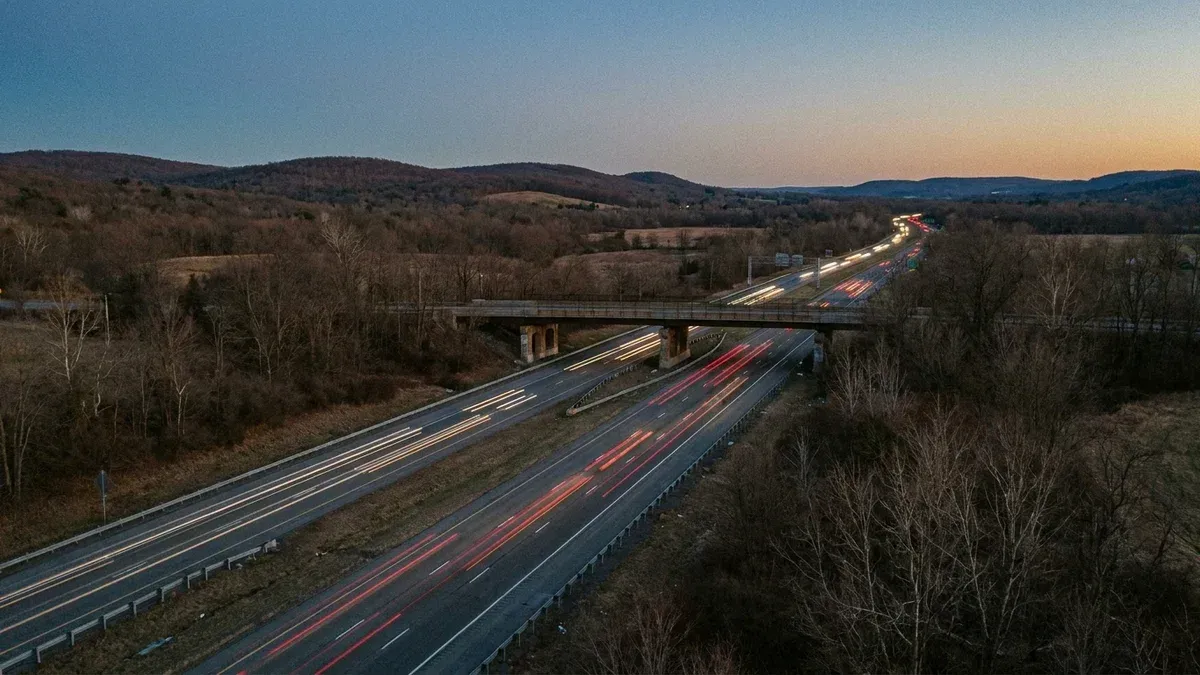
Five Years Later, New York's Traffic Deaths Are Still 18% Above 2019
New York recorded 1,101 traffic deaths in 2024, 17.9% more than the 934 recorded in 2019, the state's pre-pandemic low. Deaths peaked at 1,182 in 2022 and have eased since, but they remain well above where they stood before the pandemic. The decade of steady declines that ran through 2019 has not resumed.
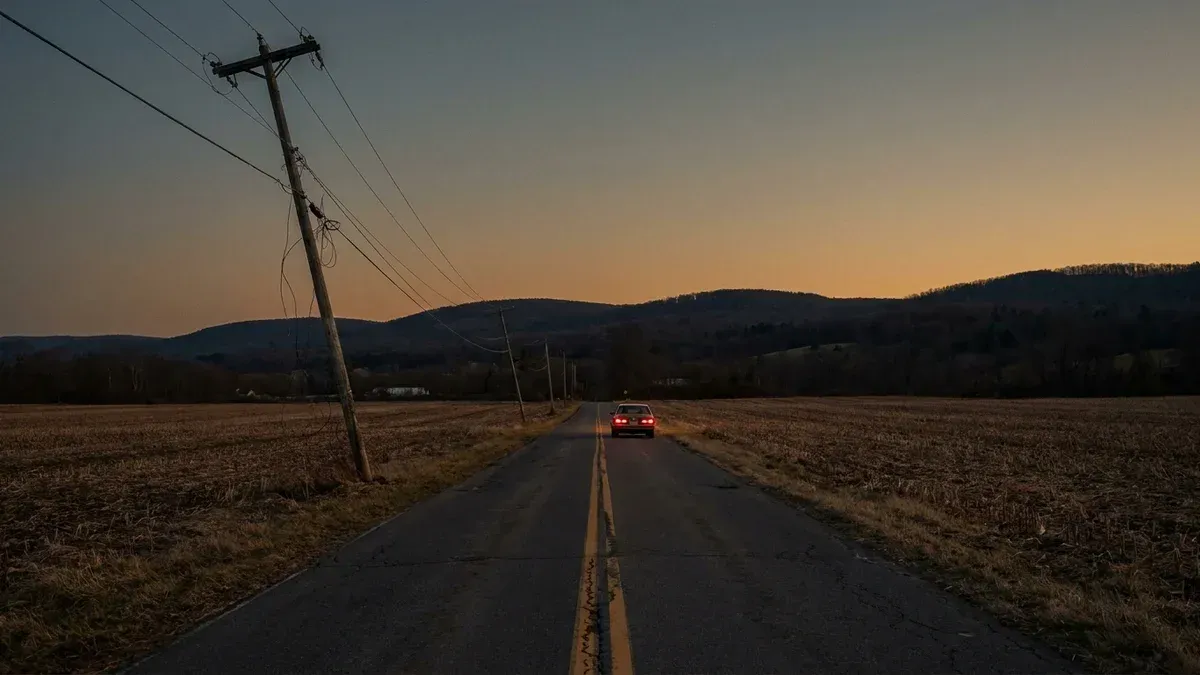
New York's Deadliest Roads Aren't in the City. They're Upstate.
From 2019 to 2023, Genesee County recorded 51 traffic deaths against a population near 58,000, a rate of 88 per 100,000 residents over those five years. Manhattan's five-year rate was 11.5. Genesee's was 7.6 times higher. Thirty counties, nearly all of them rural and upstate, were deadlier per person than any New York City borough, even though the city recorded far more crashes overall.

New York's Own Checkpoint Schedule Gives Away the Real Danger Days
NYPD collision records for 2014 through 2024 show July 3rd and July 5th combined average 166.8 people injured per day, 11.3% above every other day of the year. July 4th itself runs flat, 150.5 injured against a 149.8 baseline. Nationally, July 4th is the single deadliest calendar day on record, 25 years running, and the sharpest local spike inside that window hits at 10pm, not the afternoon. New York's own statewide numbers point past the Fourth too. July 5th ranks worse than July 4th for road deaths over the same 25-year record.